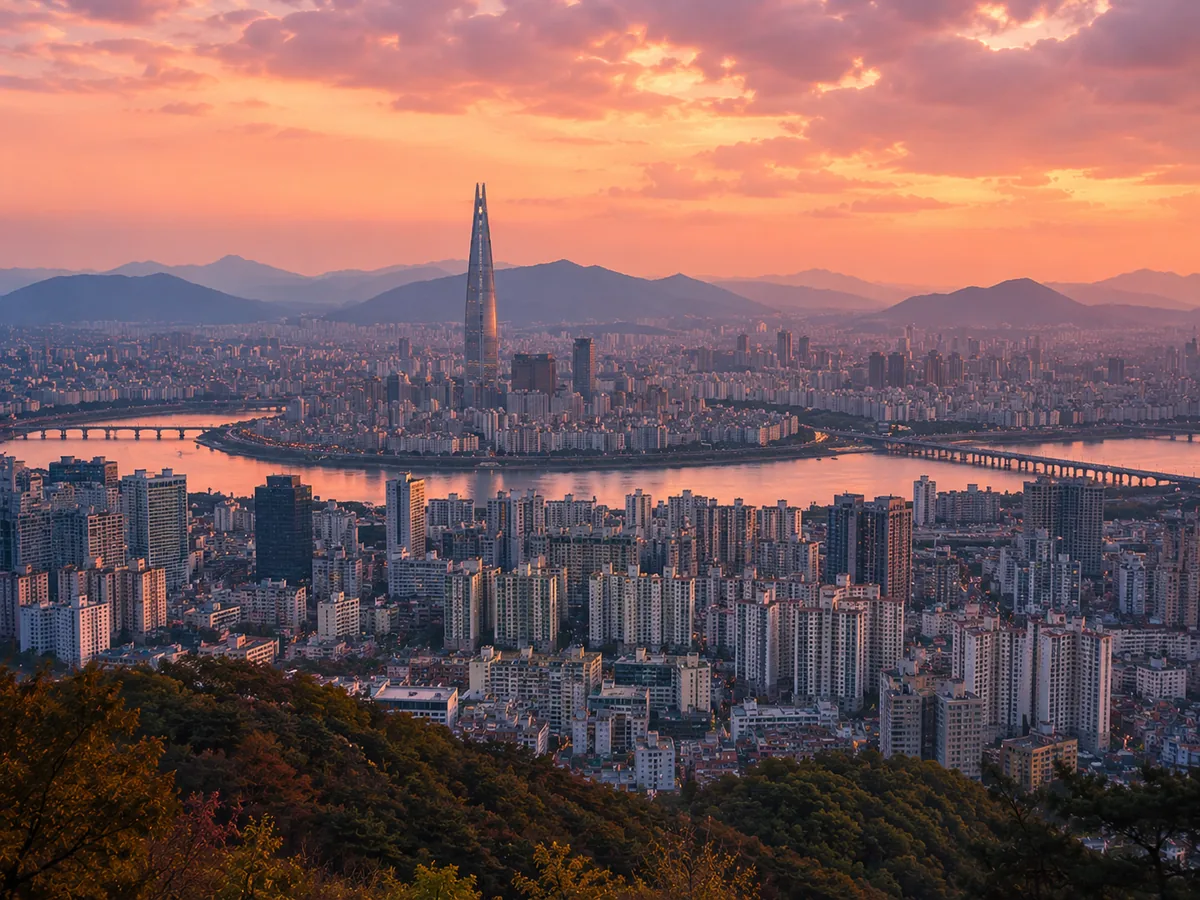
Why South Korea is a category unto itself
South Korea has one of the highest per-capita refractive surgery rates in the world. Korean vision correction clinics see extraordinary case volumes, adopt new technology aggressively, and compete on precision and outcomes rather than price. The result is a market where premium clinics operate at the technological frontier of what's possible in refractive surgery.
Korea is not a value destination in the way Colombia or India are. Prices sit above global averages and are typically comparable to or slightly below premium US clinics. What you're buying instead is the highest-volume surgeons in the world using the newest equipment, with a national culture of clinical rigor and technical precision that shows up in outcomes data.
Regulatory framework
South Korea's Ministry of Health and Welfare governs physician licensing. Refractive surgeons must be board-certified ophthalmologists through the Korean Ophthalmological Society. Korea has a national health insurance system (NHIS) that regulates baseline healthcare standards even for procedures (like LASIK) that patients pay for out of pocket.
Major hospitals in Seoul with JCI accreditation include Severance Hospital (Yonsei University), Asan Medical Center, Samsung Medical Center, and Seoul National University Bundang Hospital. Many freestanding LASIK-focused clinics in Seoul operate at very high volume without JCI accreditation, using individual surgeon board certification and Korean regulatory oversight as the primary quality signals.
Where LASIK happens in South Korea
Nearly all Korean refractive surgery activity is concentrated in Seoul. The Gangnam district (specifically Sinsa-dong and the areas around Gangnam Station) hosts an extraordinarily dense cluster of high-volume LASIK clinics — sometimes multiple premium refractive practices in a single high-rise building. This concentration is unusual globally and reflects the scale of the Korean refractive surgery market.
Notable Seoul academic ophthalmology centers include Severance Eye Hospital (Yonsei University), Seoul National University Hospital, and Asan Medical Center. These offer institutional depth for complex cases beyond routine LASIK.
Procedure availability
Korea leads or ties for global leadership on virtually every current refractive procedure:
- LASIK — standard, custom wavefront, topography-guided (Contoura), and specialized variants like Presby-LASIK for presbyopia
- PRK / LASEK — universal, with LASEK being particularly popular in Korea for younger patients
- SMILE — Korea has among the highest SMILE volumes in the world outside of Germany itself. Zeiss VisuMax platforms are essentially standard in Gangnam premium clinics.
- ICL — extremely high volume, including toric and V4c EVO+ variants for the highest prescriptions
- Refractive Lens Exchange — widely available with premium IOL options
Recovery logistics
Recommended stay:
- LASIK / SMILE: 5–7 days
- PRK / LASEK: 10–14 days
Seoul is one of the most infrastructure-dense cities in the world. The subway system is extensive and easy for tourists, but for post-op patients Kakao Taxi (Korea's dominant ride-share) is the more practical option. Accommodation in Gangnam or Myeongdong runs $100–$250 per night at mid-range hotels.
Korean summers (July–August) are hot and humid; winters (December–February) are very cold and dry. Spring (April–May) and autumn (September–October) offer the most comfortable conditions for post-op recovery.
Language and communication
Historically, English fluency in Korean medicine has been variable. That has changed substantially in the last decade for LASIK specifically because Seoul's refractive clinics increasingly target international patients from Japan, China, and Southeast Asia, and now increasingly from the US. Premium Gangnam clinics typically have dedicated international patient coordinators and English-speaking staff. That said, surgeon-to-patient direct English fluency is less consistent than in Colombia or Turkey; expect to communicate primarily through a coordinator.
Getting there
US passport holders do not need a visa for stays up to 90 days (K-ETA travel authorization required for entry; obtain online before travel at k-eta.go.kr for about $10). Canadians follow the same K-ETA framework.
Flight comparisons:
- Los Angeles → Seoul (ICN): 13 hours (direct via Korean Air, Asiana, or United)
- San Francisco → Seoul: 12 hours (direct)
- New York (JFK) → Seoul: 14 hours 30 minutes (direct via Korean Air or Asiana)
- Seattle → Seoul: 11 hours 30 minutes (direct via Korean Air or Delta)
- Vancouver → Seoul: 11 hours (direct)
Who South Korea is right for
- Patients prioritizing technological currency and surgeon case volume over cost
- Anyone specifically wanting SMILE or premium ICL variants at the highest global expertise level
- West Coast US patients (shorter flights to Seoul than to some European or Middle Eastern destinations)
- Patients with very high prescriptions or complex cases benefiting from academic subspecialty depth
- Travelers already planning East Asia trips (Japan, Taiwan) who can combine the LASIK stay
Where South Korea falls short
- Not a value destination — prices approach US premium clinic levels
- Long flight distance from most of North America
- Language friction at the surgeon-patient level (mitigated by coordinator model)
- Currency and payment friction (Korean won, though credit cards work universally)
- Aggressive online marketing by some clinics competing on volume can be off-putting
2026 pricing snapshot
Typical clinic package prices in USD, current as of Q3 2026. These are ranges from destination hospitals across the mid-to-upper clinic tier — not quotes. Actual pricing depends on your prescription, procedure choice, and clinic reputation.
| Procedure | Both eyes |
|---|---|
| LASIK (both eyes) | $2,400 (typical) · $1,800–$3,200 range |
| PRK (both eyes) | $2,100 (typical) · $1,600–$2,800 range |
| SMILE (both eyes) | $3,000 (typical) · $2,500–$3,800 range |
| ICL (both eyes) | $4,400 (typical) · $3,800–$5,200 range |
Prices reflect straightforward moderate-prescription cases (myopia −2.00 to −6.00 D). Custom wavefront, topography-guided, and complex prescriptions typically add 15–25%.
Frequently asked questions
Why is South Korea so expensive if it's not in the US or Europe?
Korea competes on quality, technology, and surgeon volume rather than price. Premium clinics have made major capital investments in the newest equipment (often multiple platforms per clinic) and their surgeons see extraordinary case volumes. That drives outcomes but doesn't drive prices down — Korean patients pay similar prices to international patients.
Is Seoul really the SMILE capital of the world?
Korea, Germany, India, and Turkey all have very high SMILE volumes. Korea's Gangnam district specifically has one of the densest clusters of Zeiss VisuMax-equipped clinics anywhere. If you're specifically a SMILE candidate seeking the highest possible case-volume clinic, Seoul is in the top tier of choices globally.
Do Korean LASIK surgeons speak English?
Coordinator-level English is universal at premium Gangnam clinics that target international patients. Direct surgeon-to-patient English fluency is more variable. Most international patients communicate through a dedicated coordinator during the pre-op and post-op process. This works well operationally but is different from the fully bilingual surgeon experience in some other destinations.
How long should I stay in Korea for LASIK?
Minimum 5-7 days for LASIK or SMILE including consult, procedure, and required follow-ups. Most international patients stay 8-10 days to combine with sightseeing (Seoul is one of the world's most interesting cities and worth extended time). PRK/LASEK requires 10-14 days.
What are Korean LASIK success rates like?
Korean refractive surgery outcomes are typically excellent, driven by high case volumes and technological currency. Published outcomes at top Seoul clinics show enhancement rates and complication rates comparable to the best US and European clinics. Verify specific clinic outcomes data during consultation rather than relying on marketing claims.
Can I use US credit cards in Seoul?
Yes, Korean payment infrastructure accepts international credit cards universally at hospitals, clinics, hotels, and major restaurants. Cash is less commonly needed than in some Asian destinations. Bring a card with no foreign transaction fee for best value.
Get a personalized shortlist for South Korea.
Tell us your prescription, budget, and travel window. We'll come back with two or three vetted clinics that fit — with typical pricing, surgeon credentials, and next-available consult dates.
Message us on WhatsApp