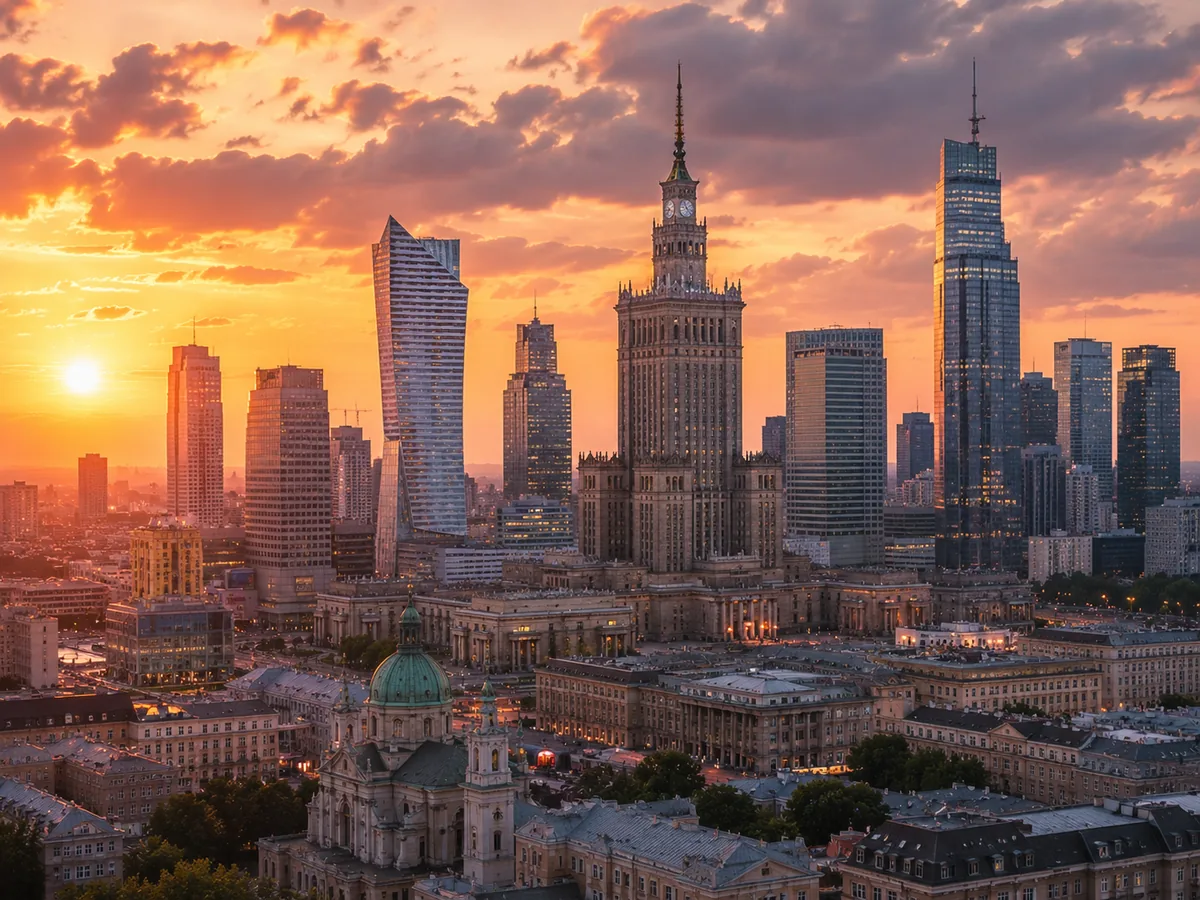
Poland's structural position
Poland has become one of the fastest-growing medical tourism markets in Europe, driven by a specific value proposition: EU regulatory standards, modern hospital infrastructure funded by two decades of EU membership investment, and prices that undercut Western Europe substantially. For LASIK specifically, Poland now attracts significant patient volume from Germany, the UK, and Nordic countries.
For North American patients, Poland is a less obvious choice than Latin America or Turkey. But for anyone with European roots, existing travel plans in the region, or a specific preference for the EU regulatory environment at lower cost than Germany or Spain, Poland is worth serious consideration.
Regulatory framework
Polish physicians are licensed by the Chief Medical Chamber (Naczelna Izba Lekarska) and hold specialty certification through the Polish Ophthalmological Society (Polskie Towarzystwo Okulistyczne). As an EU member state, Poland operates under EU Medical Device Regulation (MDR) standards. Many Polish ophthalmologists hold European Board of Ophthalmology (EBO) certification.
Poland has JCI-accredited hospitals including CDT Medicover and specific institutions in Warsaw and Krakow. Most LASIK activity, however, happens at specialty refractive surgery clinics operating under Polish medical licensing and EU regulatory frameworks rather than at general hospitals.
Where LASIK happens in Poland
Warsaw
The country's medical tourism center. Multiple established refractive surgery clinics including Optegra (a pan-European network with significant Polish operations), Lexum, and Weiss Klinik. Warsaw's modern infrastructure and international connectivity make it the standard choice for foreign patients.
Krakow
Growing medical tourism sector with several refractive surgery clinics. Popular with British and German patients combining LASIK with cultural tourism.
Wroclaw and Gdansk
Both cities have established ophthalmology infrastructure and are attracting increasing medical tourism from nearby European countries.
Procedure availability
- LASIK — standard, custom wavefront, and topography-guided widely available
- PRK — universal
- SMILE — available at major Warsaw clinics with Zeiss VisuMax platforms; less consistent at smaller cities
- ICL — widely available at premium clinics
- Refractive Lens Exchange — standard offering
Recovery logistics
Recommended stay:
- LASIK / SMILE: 5–7 days
- PRK: 10–14 days
Warsaw and Krakow both have modern accommodation infrastructure. Mid-range 4-star hotel prices run $70–$150 per night, notably cheaper than Western European equivalents. Bolt and Uber both operate reliably. Public transit is modern and efficient though less practical for post-op patients.
Spring (May) and fall (September–October) offer the most comfortable weather. Winter is cold but manageable if you're prepared.
Language and communication
English fluency at Polish medical tourism-focused clinics is high and consistent. These practices target patients from the UK, Ireland, and Germany, and English-language patient services are operational standard. Warsaw and Krakow in general have very high English fluency among younger professionals and in the tourism/business sectors.
Getting there
US and Canadian passport holders do not need a visa for stays up to 90 days in the Schengen Area (includes Poland).
Flight comparisons:
- New York (JFK / EWR) → Warsaw (WAW): 8 hours 45 minutes (direct via LOT Polish Airlines)
- Chicago → Warsaw: 9 hours 45 minutes (direct via LOT)
- Los Angeles → Warsaw: 12 hours (typically one-stop via Frankfurt or Amsterdam)
- Toronto → Warsaw: 8 hours 45 minutes (direct via LOT seasonally)
LOT Polish Airlines maintains a Chicago hub reflecting the substantial Polish-American community in the Midwest, making direct flight access from that region particularly good.
Who Poland is right for
- Patients with Polish heritage or family connections
- Anyone in Chicago or the US Midwest with easy direct flight access
- Patients seeking a lower-cost EU alternative to Germany
- Travelers combining LASIK with Central European tourism (Warsaw, Krakow, and Prague make a natural triangle)
Where Poland falls short
- Long flight distance from most of North America
- Smaller ophthalmology sector than Turkey, Spain, or Germany
- Less international brand recognition for medical tourism — requires more independent research
- Winter weather can complicate travel logistics
2026 pricing snapshot
Typical clinic package prices in USD, current as of Q3 2026. These are ranges from destination hospitals across the mid-to-upper clinic tier — not quotes. Actual pricing depends on your prescription, procedure choice, and clinic reputation.
| Procedure | Both eyes |
|---|---|
| LASIK (both eyes) | $1,300 (typical) · $900–$1,700 range |
| PRK (both eyes) | $1,100 (typical) · $800–$1,500 range |
| SMILE (both eyes) | $1,900 (typical) · $1,500–$2,400 range |
| ICL (both eyes) | $3,200 (typical) · $2,700–$3,900 range |
Prices reflect straightforward moderate-prescription cases (myopia −2.00 to −6.00 D). Custom wavefront, topography-guided, and complex prescriptions typically add 15–25%.
Frequently asked questions
Is Poland a legitimate LASIK destination?
Yes. Poland operates under EU Medical Device Regulation standards, has established refractive surgery clinics with modern equipment, and increasingly serves international patients from Western Europe. The main constraint for North Americans is flight distance rather than medical quality.
How does Poland compare to Germany for LASIK?
Similar EU regulatory standards and clinical quality; roughly 50% lower pricing in Poland. Germany has more surgeon density and deeper academic infrastructure for very complex cases. For routine LASIK, Poland offers significant savings with comparable quality.
Do Polish LASIK surgeons speak English?
At medical tourism-focused clinics in Warsaw and Krakow, yes universally. English fluency among Polish medical professionals under age 50 is very high, and international-facing clinics have dedicated English-speaking patient coordinators.
Is Optegra a good option in Poland?
Optegra is a pan-European refractive surgery network with significant operations in Poland, the UK, and other European markets. They operate at high volume with modern equipment. As with any network, verify the specific surgeon and location where you'll be treated.
Should I go to Warsaw or Krakow?
Warsaw for the largest concentration of premium refractive clinics and best international connections. Krakow for the more atmospheric city and cultural tourism opportunity during recovery. Both cities have legitimate LASIK options.
What's the total cost including travel from the US?
For a Warsaw LASIK trip: $1,300 for the procedure + $800-1,200 for flights + $600-900 for 6-7 nights hotel and meals. Total roughly $2,700-3,400 all-in. Cheaper than Spanish or Czech trips; more expensive than Turkey or Latin America.
Get a personalized shortlist for Poland.
Tell us your prescription, budget, and travel window. We'll come back with two or three vetted clinics that fit — with typical pricing, surgeon credentials, and next-available consult dates.
Message us on WhatsApp