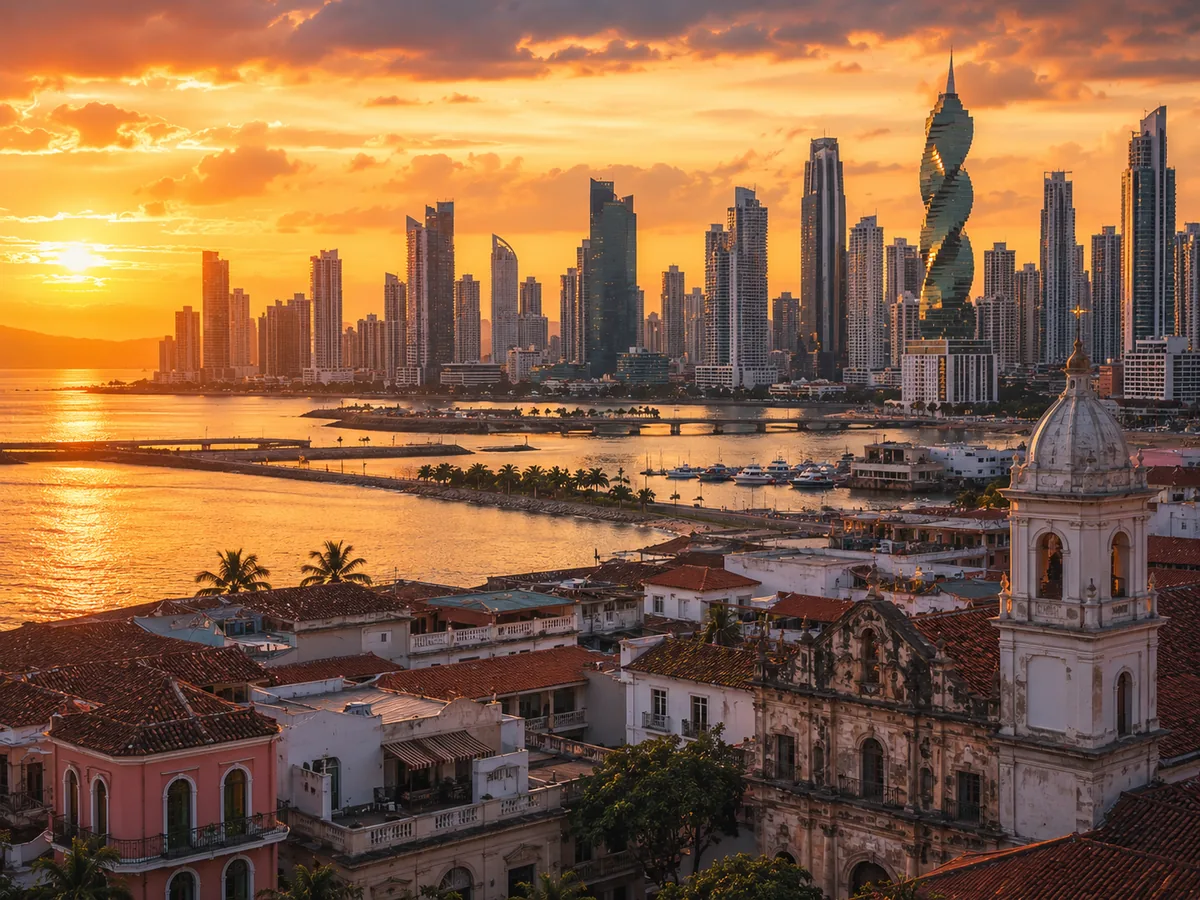
Panama's structural advantages
Panama has been intertwined with the US for over a century, and the residue of that relationship shows up in ways that matter for medical tourism: the US dollar is the de facto currency (alongside the balboa at 1:1), English is widely spoken in professional contexts, and healthcare regulations align closely with US expectations. The country also hosts the region's largest US expat community, which supports a healthcare infrastructure explicitly designed for American patients.
For LASIK, Panama is not the cheapest destination but sits at an interesting middle ground: comparable quality to Costa Rica or Colombia, with structural comfort factors (currency, English, familiarity) that some patients find worth the modest premium.
Regulatory framework
Panama's Ministry of Health (Ministerio de Salud, MINSA) regulates all medical practice. Ophthalmologists must hold specialty certification through the Sociedad Panamena de Oftalmologia.
Panama has JCI-accredited hospitals including Hospital Punta Pacifica (Panama City), which is affiliated with Johns Hopkins Medicine International. This affiliation is a distinctive credential in Latin America — the hospital's ophthalmology department benefits from Johns Hopkins clinical protocols and continuing education partnerships. Hospital Nacional and Centro Medico Paitilla are other significant private hospitals in Panama City with strong ophthalmology programs.
Where LASIK happens in Panama
Nearly all Panamanian medical tourism activity is concentrated in Panama City, particularly in the Punta Pacifica, Paitilla, and El Cangrejo neighborhoods. These areas host the major private hospitals and specialty clinics that serve international patients. The city's modern skyline and infrastructure make it feel more like Miami than a typical Latin American capital.
Hospital Punta Pacifica is the largest single institution for international medical tourism and its Johns Hopkins affiliation is a genuine differentiator. Centro Medico Paitilla and Hospital Nacional are other established options.
Procedure availability
- LASIK — standard and custom wavefront available; topography-guided at premium clinics
- PRK — universally available
- SMILE — available at limited clinics with Zeiss VisuMax platforms
- ICL — available at premium clinics with two-appointment planning
Recovery logistics
Recommended stay:
- LASIK / SMILE: 5–7 days
- PRK: 10–14 days
Panama City's tourism infrastructure supports comfortable recovery. Casco Viejo (the restored colonial old town) and the Cinta Costera oceanfront are pleasant post-op neighborhoods for walks. Accommodation runs $90–$200 per night at mid-range hotels. Uber operates reliably. The Metro is safe and modern.
For extended vacation combined with LASIK, Bocas del Toro (Caribbean side) and the Pearl Islands are accessible domestic flight destinations for the recovery week.
Language and communication
English fluency at Panama's international-facing hospitals is very high, particularly at Hospital Punta Pacifica where Johns Hopkins-affiliated protocols include English-language patient services as standard. Panama City in general has higher English fluency than most Latin American capitals due to the US expat and business community.
Getting there
US passport holders do not need a visa for stays up to 180 days. Panama uses the US dollar as legal tender, eliminating currency exchange friction entirely.
Flight comparisons:
- Miami → Panama City (PTY): 3 hours 20 minutes (direct)
- Houston → Panama City: 3 hours 45 minutes (direct via United and Copa)
- New York (JFK / EWR) → Panama City: 5 hours 15 minutes (direct)
- Los Angeles → Panama City: 7 hours (typically one-stop)
- Toronto → Panama City: 6 hours 45 minutes (direct via Copa)
Panama City's Tocumen International (PTY) is the largest hub in Central America, with excellent connections to and from most US cities via Copa Airlines.
Who Panama is right for
- Patients who want structural comfort factors: US dollar pricing, English fluency, JHI-affiliated hospital option
- Anyone based in Miami, Houston, or the US Southeast with easy direct flights
- US expats or retirees already living in or considering Panama
- Patients who want a Western-style hospital environment (Panama City's medical infrastructure is genuinely modern and polished)
Where Panama falls short
- More expensive than Colombia or Mexico for equivalent procedures
- Smaller ophthalmology sector than Colombia or Mexico — fewer surgeon options
- Limited SMILE availability compared to more established markets
- Panama City's tropical humidity can be uncomfortable for extended stays
2026 pricing snapshot
Typical clinic package prices in USD, current as of Q3 2026. These are ranges from destination hospitals across the mid-to-upper clinic tier — not quotes. Actual pricing depends on your prescription, procedure choice, and clinic reputation.
| Procedure | Both eyes |
|---|---|
| LASIK (both eyes) | $2,100 (typical) · $1,600–$2,600 range |
| PRK (both eyes) | $1,800 (typical) · $1,400–$2,300 range |
| SMILE (both eyes) | $2,600 (typical) · $2,100–$3,200 range |
| ICL (both eyes) | $3,900 (typical) · $3,300–$4,700 range |
Prices reflect straightforward moderate-prescription cases (myopia −2.00 to −6.00 D). Custom wavefront, topography-guided, and complex prescriptions typically add 15–25%.
Frequently asked questions
Is the Johns Hopkins affiliation at Hospital Punta Pacifica real?
Yes. Hospital Punta Pacifica is a member of Johns Hopkins Medicine International, meaning it operates under clinical protocols developed with Johns Hopkins and its physicians participate in continuing education programs coordinated with the JHU institution. It's a real institutional affiliation, not a marketing label.
Why is Panama LASIK more expensive than Colombia?
Higher operating costs in Panama, US dollar pricing (which prevents the currency advantages available in Colombia's peso-based pricing), and a smaller competitive market with fewer clinics competing for volume. You're paying for the structural comfort factors: US dollars, English fluency, familiar hospital environment.
Can I pay with US credit cards in Panama?
Yes, universally. Panama uses the US dollar and US credit cards are accepted everywhere including at hospitals. This eliminates the currency exchange friction that exists in most other Latin American destinations. Some hospitals may charge a small foreign transaction fee; ask your credit card issuer.
Do Panamanian ophthalmologists speak English?
At major private hospitals serving international patients, yes. Panama has one of the highest English fluency rates in Latin America due to the US historical presence and current expat community. Front-desk staff and physicians at Hospital Punta Pacifica, Centro Medico Paitilla, and Hospital Nacional routinely handle US and Canadian patients.
Is Panama City safe for medical tourism?
Yes, in the specific neighborhoods where medical tourism happens. Punta Pacifica, Paitilla, and El Cangrejo are prosperous, safe areas with good hotel infrastructure. Casco Viejo (the tourist old town) is also safe. Some other Panama City neighborhoods have higher crime rates — stick to the areas your hospital recommends.
How does Panama compare to Costa Rica?
Both offer high English fluency and JCI-accredited hospital infrastructure. Panama has the Johns Hopkins affiliation advantage and US dollar convenience. Costa Rica has a slightly more developed medical tourism sector overall and better post-op vacation infrastructure. Prices are broadly similar; Panama slightly higher on average.
Get a personalized shortlist for Panama.
Tell us your prescription, budget, and travel window. We'll come back with two or three vetted clinics that fit — with typical pricing, surgeon credentials, and next-available consult dates.
Message us on WhatsApp