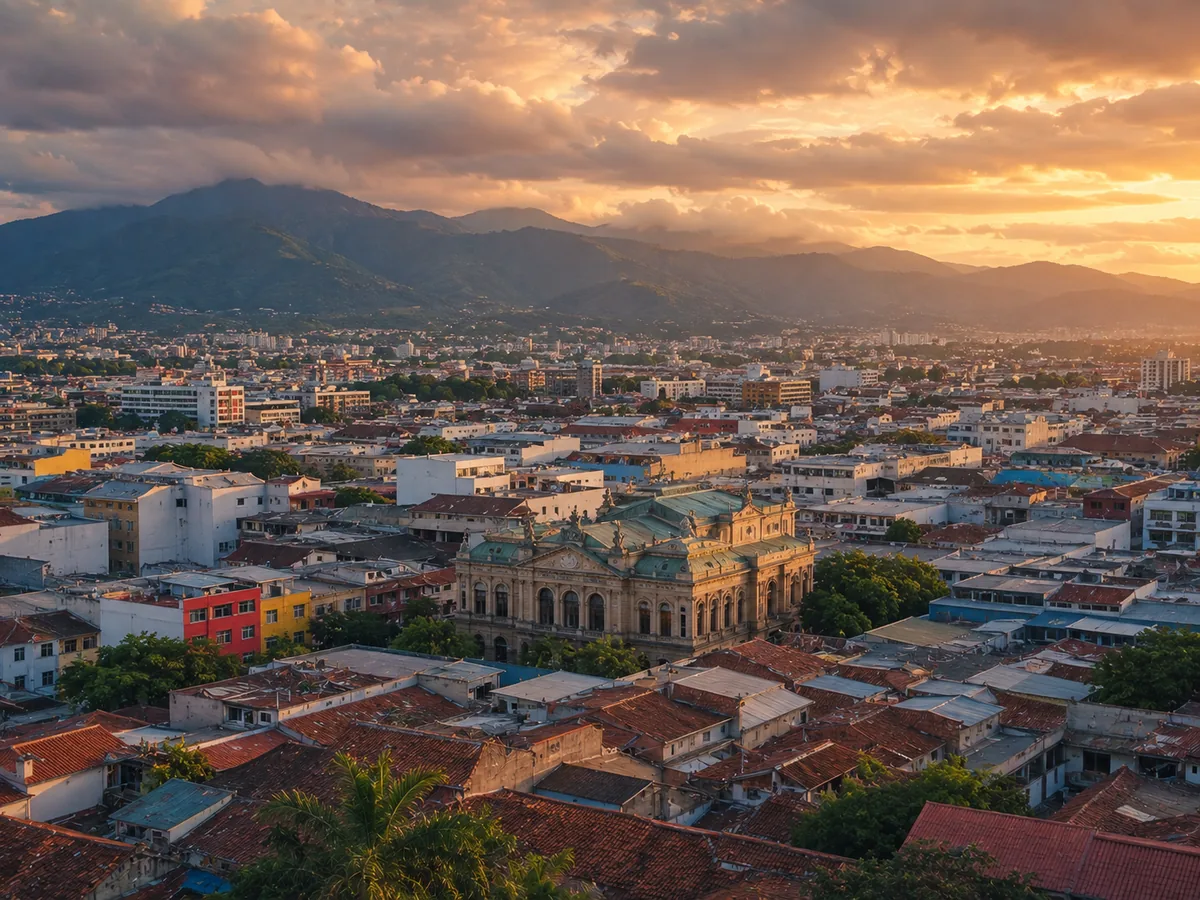
Costa Rica's medical tourism identity
Costa Rica pioneered medical tourism in Central America and remains the region's most polished destination. The country's political stability (no military since 1948), extensive US retiree community, and English-friendly healthcare sector give it a specific appeal: it feels closer to a Western medical experience than most international destinations, at meaningfully lower prices than the US.
For LASIK specifically, Costa Rica is not the cheapest option in Latin America (Colombia and Mexico both price lower). Its advantage is a combination of quality, English-language ease, and proximity to the US — particularly for patients who might extend the trip into a real vacation.
Regulatory framework
Costa Rica's Ministry of Health (Ministerio de Salud) regulates all medical practice. Physicians must be licensed by the Colegio de Medicos y Cirujanos de Costa Rica. Refractive surgeons hold ophthalmology board certification through the Asociacion Costarricense de Oftalmologia.
Hospital-level accreditation includes JCI at several institutions. Hospital CIMA San Jose and Hospital Clinica Biblica are both JCI-accredited and serve international patients extensively. These are large private hospitals with ophthalmology departments rather than freestanding LASIK-only clinics, which is a meaningful institutional difference from the boutique-clinic model dominant in some other destinations.
Where LASIK happens in Costa Rica
San Jose (the capital)
Nearly all Costa Rican medical tourism is concentrated in the greater San Jose metropolitan area, particularly in the Escazu and Santa Ana neighborhoods which host the major international-facing hospitals and clinics. Some refractive practices operate as departments within Hospital CIMA or Hospital Clinica Biblica; others are independent specialty clinics.
Guanacaste
The Pacific coast region around Liberia has a growing medical tourism footprint attached to its resort infrastructure. Liberia's international airport (Daniel Oduber Quiros International, LIR) has direct flights from several US cities. Medical infrastructure here is limited compared to San Jose but does exist for basic procedures.
Procedure availability
- LASIK — standard, custom wavefront, and topography-guided widely available
- PRK — universally available
- SMILE — more limited than in other destinations; only a handful of San Jose clinics have Zeiss VisuMax platforms
- ICL — available at premium clinics with two-appointment planning
Recovery logistics
Costa Rica pairs well with recovery travel because the country's tourism infrastructure is genuinely first-rate. The standard pattern for LASIK patients is: 3–4 days in San Jose for consult, procedure, and initial follow-up, then move to a beach or rainforest destination for the recovery week.
Recommended stay:
- LASIK / SMILE: 5–7 days (with optional extension for tourism)
- PRK: 10–14 days
Accommodation in San Jose runs $80–$180 per night at mid-range hotels. Uber operates but has legal grey areas — official taxis and hotel car services are more reliable. The public bus system is extensive but not really practical for post-op patients.
Language and communication
English fluency at Costa Rican medical tourism hospitals is universal and exceptional — often the highest in Latin America. Both patient-facing staff and physicians at CIMA and Clinica Biblica routinely handle US and Canadian patients and communicate as fluently as they would in any US hospital. This is one of Costa Rica's genuine competitive advantages.
Getting there
US and Canadian passport holders do not need a visa for stays up to 180 days. Costa Rica charges no departure tax at Juan Santamaria International (SJO, serving San Jose).
Flight comparisons:
- Miami → San Jose (SJO): 2 hours 45 minutes (direct)
- Houston → San Jose: 3 hours 45 minutes (direct)
- Los Angeles → San Jose: 6 hours 30 minutes (typically direct via United or Southwest)
- New York (JFK) → San Jose: 5 hours 30 minutes (direct via JetBlue)
- Toronto → San Jose: 6 hours (direct via Air Canada seasonally)
Who Costa Rica is right for
- Patients who prioritize English-language ease and Western-style hospital environments over minimum cost
- Anyone planning a vacation and wanting to add LASIK to the trip (the country's tourism infrastructure is exceptional)
- US retirees or long-term visitors already spending time in Costa Rica
- Patients who want short flight times from the US East or Central regions without going as far as Colombia
Where Costa Rica falls short
- Not the cheapest option — prices sit above Colombia, Mexico, and India for equivalent procedures
- Smaller ophthalmology sector than Colombia or Mexico — fewer clinic and surgeon options
- Limited SMILE availability compared to more established markets
- Less specialty depth for complex or unusual cases
2026 pricing snapshot
Typical clinic package prices in USD, current as of Q3 2026. These are ranges from destination hospitals across the mid-to-upper clinic tier — not quotes. Actual pricing depends on your prescription, procedure choice, and clinic reputation.
| Procedure | Both eyes |
|---|---|
| LASIK (both eyes) | $1,950 (typical) · $1,500–$2,400 range |
| PRK (both eyes) | $1,700 (typical) · $1,300–$2,100 range |
| SMILE (both eyes) | $2,500 (typical) · $2,000–$3,100 range |
| ICL (both eyes) | $3,800 (typical) · $3,200–$4,500 range |
Prices reflect straightforward moderate-prescription cases (myopia −2.00 to −6.00 D). Custom wavefront, topography-guided, and complex prescriptions typically add 15–25%.
Frequently asked questions
Is Costa Rica really a good LASIK destination or just for dentistry?
Costa Rica's medical tourism is much better known for dental work, but its ophthalmology sector is real and increasingly capable. The top clinics operate through JCI-accredited hospitals with US-comparable equipment and standards. Fewer options than Colombia or Mexico, but the ones that exist are legitimate.
How much can I save on LASIK in Costa Rica vs the US?
Roughly 30-40% below US pricing. Not the deepest discount available internationally (Colombia offers 50-60% off, India even more), but combined with English fluency and short flights, it's a compelling package for the right patient.
Can I combine LASIK with a Costa Rica vacation?
Very much so — this is Costa Rica's strongest use case. Do the procedure in San Jose, complete the 24-hour post-op check, then travel to Manuel Antonio, Guanacaste beaches, or the Arenal volcano region for the recovery week. Wear the wraparound sunglasses provided, avoid direct sun on your eyes for the first two weeks, and skip swimming for at least a week.
Do Costa Rican surgeons speak English?
At CIMA, Clinica Biblica, and other international-facing hospitals, English fluency is universal and excellent — often better than at some other Latin American medical tourism destinations. This is a real Costa Rican advantage.
What's the safest way to get around San Jose?
For post-op patients, hotel car services or radio taxis (the red ones with yellow triangles) are the most reliable options. Uber operates but is in a legal grey area. Public buses are extensive but not practical for someone recovering from eye surgery. Most hospitals will arrange transportation to and from your accommodation.
Is Costa Rica safe?
Yes, by regional standards. Costa Rica has one of the highest safety ratings in Central America and San Jose's medical tourism neighborhoods (Escazu, Santa Ana) are among the safest urban areas in the country. Standard urban travel precautions apply.
Get a personalized shortlist for Costa Rica.
Tell us your prescription, budget, and travel window. We'll come back with two or three vetted clinics that fit — with typical pricing, surgeon credentials, and next-available consult dates.
Message us on WhatsApp