A negative screening result is information, not a setback
A patient may arrive expecting a quick operation and learn that the cornea, prescription or ocular surface makes LASIK unsuitable. Thin or irregular corneas, unstable refraction, significant dry eye or other eye disease can require more evaluation or make refractive surgery inappropriate. The FDA emphasizes proper candidate screening before consent.
Avoid a clinic that answers every contraindication with a more expensive technology package. A new device is not a substitute for a careful diagnosis. Ask the treating ophthalmologist which measurement caused concern, whether it needs repeating and whether an independent second opinion is appropriate.
If the issue is dryness or ocular surface disease
Dry eye can affect both the accuracy of testing and symptoms after refractive surgery. A clinician may recommend evaluation or treatment of the ocular surface before considering whether any elective correction is reasonable. Do not self-prescribe drops or assume a change of procedure solves every dryness problem.
Ask whether the testing should be repeated after treatment, what interval is clinically reasonable and what continuing risk would remain even if symptoms improve. The purpose of delaying surgery is accurate eligibility assessment, not forcing a patient into a prepaid travel schedule.
If the issue is corneal thickness or shape
Corneal tomography and topography can identify features that raise concern for corneal ectasia or other problems. If your doctor is worried about keratoconus or irregularity, get the exact images and measurements. A recommendation against LASIK may mean that other corneal laser surgery is also inappropriate.
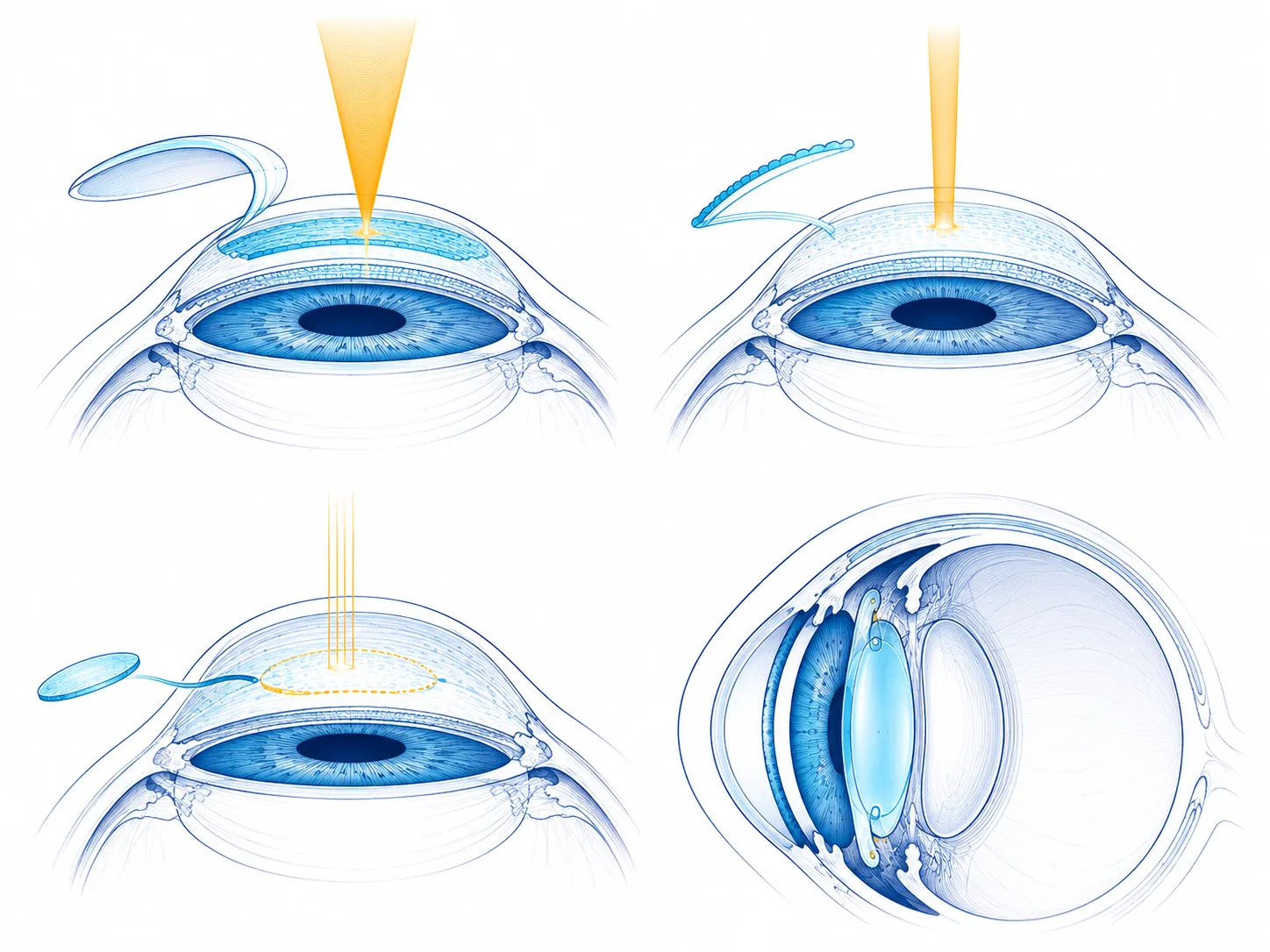
PRK creates no LASIK flap and may be considered for some patients, but it is not safe for every thin or irregular cornea. SMILE also has its own selection rules. Do not book an alternative until a specialist explains whether the structural concern applies to it.
If the prescription is unusually strong
A high degree of myopia or other refractive error can change the benefit–risk calculation for corneal laser treatment. Depending on age, anatomy and eye health, an ophthalmologist may discuss an implantable collamer lens or other approaches. Lens surgery is an intraocular operation with distinct risks and follow-up needs.
Other patients may be better served by glasses, contacts or deferring surgery. If the proposed alternative has a new price, surgery date or recovery period, treat it as a new decision requiring consent and an updated travel plan rather than an automatic substitution.
Handling the money and the trip
Before paying, obtain written terms distinguishing diagnostic fees from surgical deposits. Ask what happens if an examination after arrival rules you out, whether any balance is refundable and whether an alternative treatment carries a separate consent process. This scenario should be explained before flight tickets are purchased.
If you are not a candidate, do not feel obligated to 'get something done' because you traveled. Use the remaining time for an independent consultation, return home with your records and reassess. The cost of a cancelled operation may be much lower than the cost of an inappropriate one.
Questions for the second opinion
Ask the new specialist to review the actual scans and explain the risk concern in plain language. Is the issue temporary, like an unstable surface, or a structural finding that may permanently affect eligibility? Which tests would resolve uncertainty, which procedures remain on the table and what could happen if you choose no surgery?
A careful second opinion should not promise 20/20 vision or a complication-free result. The strongest outcome is an informed decision that can be supported by the examination and an appropriate follow-up plan.
Before you make a deposit
Obtain an independent examination, get the named surgeon and actual facility in writing, review the procedure risks and alternatives, and establish who will handle postoperative care after you return home. If important details are missing, postpone the commitment until you have answers.
Clinical and travel sources
These primary sources describe general clinical risks and medical-travel precautions; none is an endorsement or certification of a particular overseas clinic.
- FDA LASIK surgery checklist
- AAO laser surgery recovery
- CDC medical tourism guidance
- ESCRS refractive surgery recommendations
Compare the right questions before you travel
Share your intended destination, prescription and travel timing. We can help organize questions to ask providers; we do not represent any clinic as independently vetted.
Ask about planning options