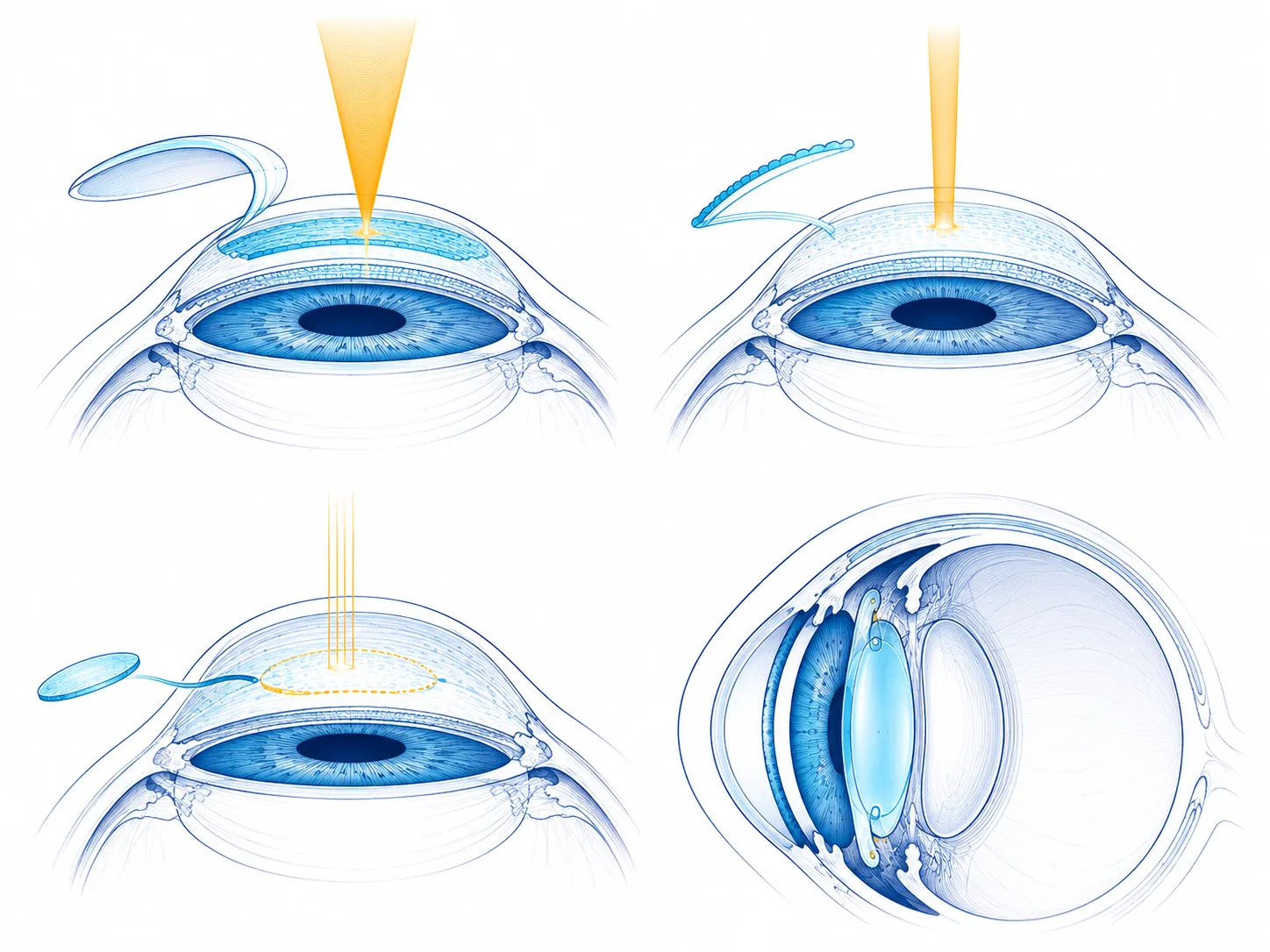
Find your at-home ophthalmologist first
Before putting down a deposit abroad, contact an ophthalmologist or eye-care practice near home. Explain that you are considering elective refractive surgery in another country, and ask whether the clinician can provide postoperative checks and urgent evaluation if necessary. A routine optometry appointment and an emergency ophthalmology referral may be separate services; understand how each is arranged.
Ask whether the practice needs preoperative records, a formal referral or a baseline exam before travel. Confirm the expected costs and whether your insurance covers services related to an elective operation performed abroad. Do not assume that a general insurance policy or the overseas clinic will automatically pay for a subsequent complication.
What happens the first day and first month?
The American Academy of Ophthalmology describes assessment the day after laser eye surgery, and later reviews over subsequent months. The precise schedule is set by your surgeon and varies by procedure and recovery. Dryness, blurry or changing vision, glare and halos can occur; the clinician should tell you which symptoms are expected and which require prompt attention.
A normal early review does not mean follow-up is finished. Patients should understand their drop schedule, whether they may wear makeup or return to swimming, and when they may drive. Do not assume that being able to see well immediately after LASIK is equivalent to a fully healed eye.
What if your recovery changes while abroad?
Get a written list of urgent warning signs before surgery. Severe or increasing pain, significant vision decline, substantial redness or new light sensitivity deserve prompt ophthalmic assessment. If you cannot reach your treating doctor, use local emergency care rather than waiting for a message from a patient coordinator.
Ask the clinic for a direct clinical contact, operating hours and after-hours escalation process. Make sure you know which hospital or eye emergency service can examine you if the surgery center is closed. Keep emergency transport arrangements simple, particularly if you are traveling alone.
What belongs in the transfer-of-care packet?
Request the surgeon’s name and credentials, operation date, procedure and laterality, operative report, diagnostic scans, medications given, postoperative findings and future check schedule. Ask for records in a language the receiving clinician can use. Photos of a prescription bottle or a promotional package are not substitutes for an operation summary.
Tell your domestic clinician the truth about the location and timing of surgery, any medications and any symptoms. A complete record can help distinguish expected postoperative findings from a complication that requires intervention. Protect your records when transferring them electronically.
Scheduling the return flight
Avoid a fixed universal promise such as 'safe to fly after 24 hours.' The clinician must decide when you can travel based on the examination and your specific procedure. PRK, lens implantation and LASIK differ in recovery and aftercare. A trip that allows a medically necessary extra visit is preferable to an itinerary with no flexibility.
Build a buffer into lodging and tickets, and plan a quiet recovery environment close to the clinic. The CDC advises medical travelers to be cautious about strenuous activities during recovery and to have a plan for complications. Do not turn an elective surgery trip into an obligation to sightsee before your doctor has cleared you.
A one-page handoff plan
Before departing, write down the overseas surgeon’s direct contact, clinic address, emergency number, procedure date, key medications, planned examination dates, domestic ophthalmologist, domestic emergency eye service and insurance details. Share the plan with a trusted person who can help if you cannot navigate transport or calls yourself.
A good aftercare arrangement is one in which named clinicians accept responsibility for each stage of assessment. Remote communication can be helpful, but it does not replace examination of a painful or suddenly worse eye.
Before you make a deposit
Obtain an independent examination, get the named surgeon and actual facility in writing, review the procedure risks and alternatives, and establish who will handle postoperative care after you return home. If important details are missing, postpone the commitment until you have answers.
Clinical and travel sources
These primary sources describe general clinical risks and medical-travel precautions; none is an endorsement or certification of a particular overseas clinic.
- FDA LASIK surgery checklist
- AAO laser surgery recovery
- CDC medical tourism guidance
- ESCRS refractive surgery recommendations
Compare the right questions before you travel
Share your intended destination, prescription and travel timing. We can help organize questions to ask providers; we do not represent any clinic as independently vetted.
Ask about planning options